
Chapter 6
Stop Smoking Service
Strengthening for lasting change.

Understanding the challenge
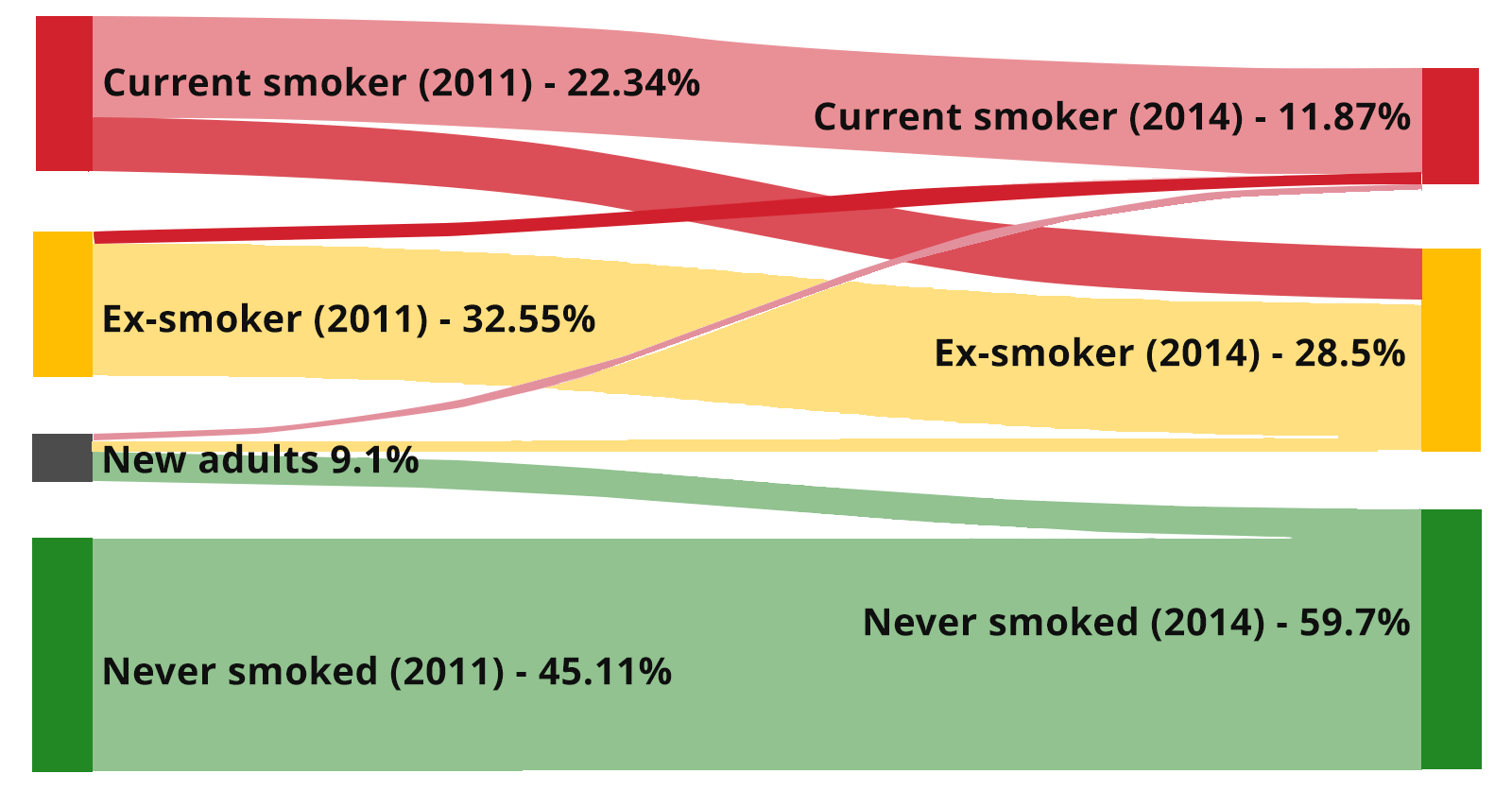
It includes ‘new adults’, meaning people who turned 18 during this period. They are assumed to join the population with the same smoking pattern seen in 2024.
Overall, smoking has almost halved. Many smokers have quit, and people who have never smoked now make up a bigger part of the population.
How smoking has shifted (2011 – 2024)
Source: OHID. Public Health Profiles.
Drivers behind the new approach
Investments have been set to build extra service capacity and develop pathways that make it easier for smokers to access support tailored to their needs.
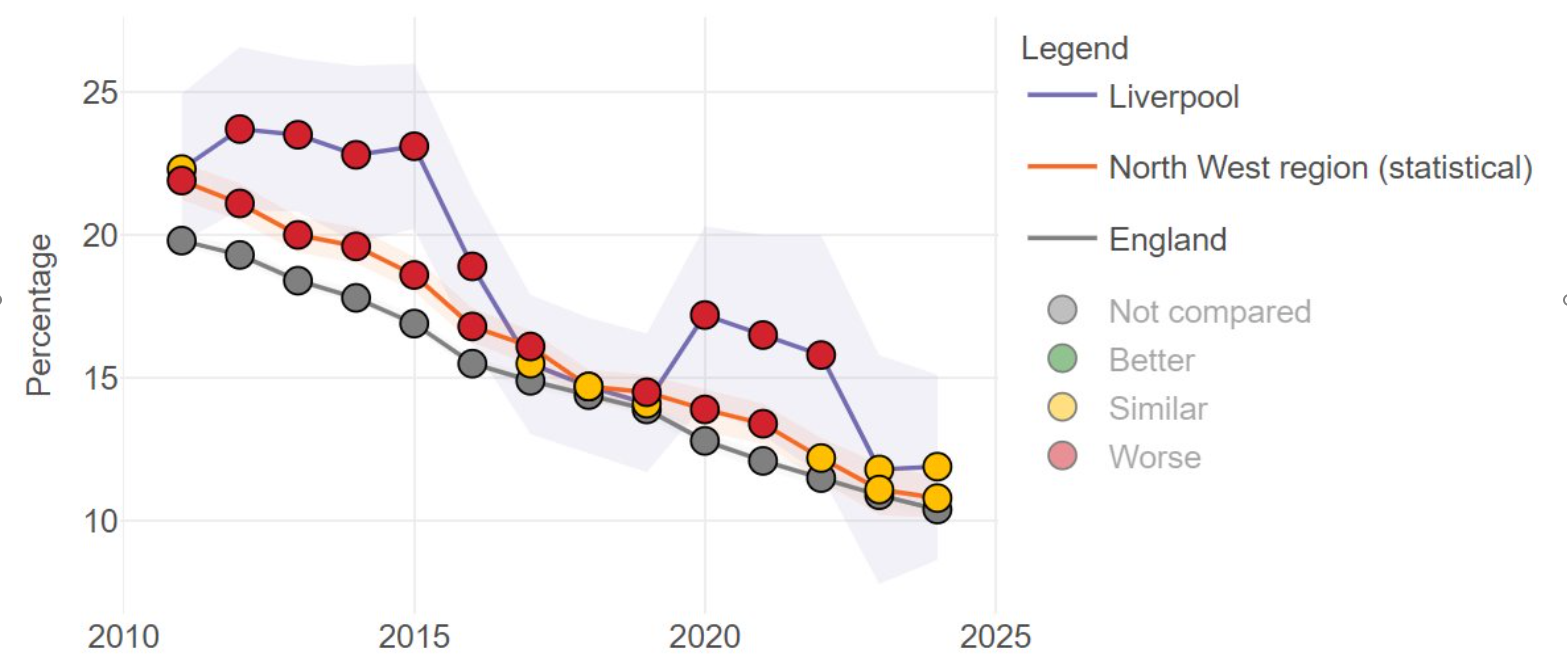
Smoking Prevalence in adults (aged 18 and over)
Source: OHID. Public Health Profiles.
The graph shows that smoking rates have fallen over time in all areas, but Liverpool has remained consistently higher than both the North West and England averages.
The impact of the transformation of Stop Smoking Services for lasting change
Extra investment has been used to hire more stop smoking advisors. This has made it quicker and easier for people who want to quit to get specialist support and nicotine replacement therapy.
A new fast electronic referral system is now in place. It makes it easier for primary care teams to refer smokers to the stop‑smoking service. It also cuts waiting times for a first appointment, helping people get support while they are still motivated.
Because some smokers may not feel confident asking for help, new community outreach workers now support people in areas with the highest smoking rates. They introduce the service to smokers and give encouragement to help them try to quit.
As vaping has become a popular and effective way to quit, the service has launched a new Swap to Stop scheme. It gives smokers a free vape starter kit to use instead of cigarettes.
For smokers who prefer to quit on their own, a new digital platform has been created. It offers many support options and advice that can be accessed anytime, day or night.

Vape starter kit.
Case study
The impact of smoking became painfully real when Jason watched his mother lose her independence due to chronic obstructive pulmonary disease and heart complications caused by smoking. Years later, in November, his brother was diagnosed with terminal mouth and throat cancer. He passed away at 52. “Time to stop,” Jason remembers thinking.
Despite his grief, Jason admits that taking the first step was difficult. “I kept making excuses—‘I’ll wait till after the funeral.’” But he decided to join Smokefree Liverpool the day before his brother’s funeral and, with the support of his smoking cessation practitioner, Kyriakos, he set a quit date just two days later.
Smokefree Liverpool provided personalised support, nicotine replacement therapy, and a free vape through partner organisation Totally Wicked. Jason describes the programme as transformative from day one.
He made deliberate lifestyle changes—swapping morning cigarettes for a shower, and smoking breaks for short walks. When he had to stop using patches due to a skin reaction, continued encouragement from his practitioner, family, and friends helped him stay focused. He now uses his vape sparingly and has already reduced his nicotine level.
Jason credits Smokefree Liverpool for helping him succeed where he had struggled for years:
He urges others not to wait for a crisis before getting help.
“Don’t wait for the wheezing, the coughing, or worse. I lost my Mum and my Brother much sooner than necessary. I’m proud I’ve stopped—and I hope I’m around for my kids for a long time to come.”
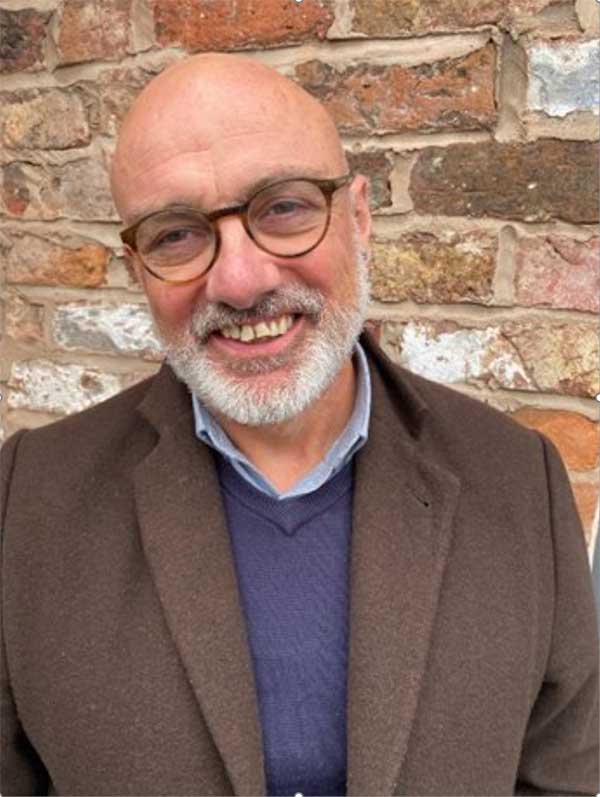
“Smokefree gave me the confidence to start fresh. I changed my routines, broke old habits, and they were there every step of the way.”
Jason, Smokefree Liverpool service user
From now to next
Increase the number of staff who can deliver stop‑smoking support. This will help more smokers set a quit date and achieve a four‑week quit.
Continue to reduce smoking‑related health inequalities in the city. Focusing support on communities where smoking rates are still high.
Increase access to quick and effective stop‑smoking support for all hospital patients, including support that continues after they leave the hospital.


“The team are really helpful and supportive. In the end, you have to make the decision yourself, but having someone there who understands really makes the difference.”